The amount of electrical energy an Automated External Defibrillator (AED) delivers to restore a normal heart rhythm is referred to as biphasic defibrillation joules. In the United States, biphasic AEDs typically operate within a range of 100 to 360 joules, depending on the specific device. By comparison, monophasic defibrillation generally requires 100 joules or less, meaning biphasic defibrillation uses roughly 150% more energy.
Defibrillation is a vital medical intervention used to treat life-threatening cardiac arrhythmias, including ventricular fibrillation and pulseless ventricular tachycardia. Sudden Cardiac Arrest (SCA) is one of the leading causes of death in the United States. As a result, education, proper training, and broad availability of AEDs are widely recognized as essential factors in improving survival rates and the likelihood of hospital discharge for SCA victims.
What Is a Biphasic Defibrillator?
A biphasic defibrillator is a medical device used to restore a normal heart rhythm when the heart stops or beats abnormally. Unlike a monophasic defibrillator, which delivers a single-direction shock, a biphasic defibrillator delivers electrical energy in two phases. This dual-phase shock pattern improves the effectiveness of defibrillation and increases the likelihood of successfully restarting the heart.
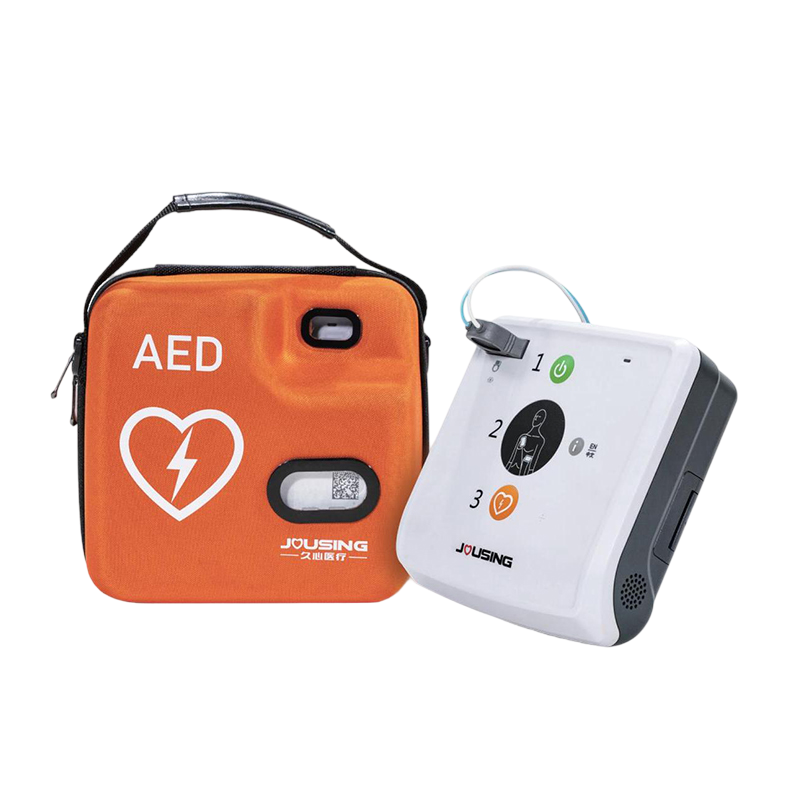
What Is the Difference Between Monophasic and Biphasic Defibrillation?
Monophasic and biphasic defibrillators are two types of devices used to treat life-threatening cardiac arrhythmias. The key difference between them lies in the waveform of the electrical current delivered to the heart.
Monophasic defibrillators use a single-phase waveform that delivers a continuous current for the entire duration of the shock. The most commonly used waveform in these devices is the damped sine wave.
Biphasic defibrillators, by contrast, use a waveform in which the current changes in both amplitude and polarity during the shock. There are two main types of biphasic waveforms: biphasic truncated exponential (BTE) and biphasic rectangular (BR).
Studies have shown that biphasic defibrillators are more effective at restoring normal heart rhythm while using less energy than monophasic defibrillators. They are also associated with a lower risk of post-shock myocardial dysfunction and higher survival rates.
Although monophasic defibrillators generally require less energy, biphasic defibrillators have demonstrated better overall effectiveness in restoring normal cardiac function and improving patient outcomes.
How many Joules does a defibrillator use?
When a monophasic defibrillator is used, defibrillation typically requires 360 joules of energy to be effective.
With a biphasic defibrillator, however, the same therapeutic outcome can usually be achieved with around 200 joules. This is because the biphasic waveform delivers energy more efficiently and in a more controlled manner, resulting in a higher success rate with lower energy levels.
Biphasic shocks are also linked to fewer complications and side effects compared to monophasic shocks. This is largely due to improved energy efficiency and a reduced likelihood of causing damage to the heart or surrounding tissues.
Overall, biphasic defibrillation is considered a safer and more effective approach, as it achieves successful defibrillation with less energy and a lower risk of adverse effects.
Joules (Energy) = Voltage × Current × Time
AED Technology That Uses Less Energy
Overall, biphasic defibrillation is an AED technology that requires less energy than monophasic defibrillation. By using a different waveform, biphasic defibrillation delivers electrical energy to the heart in a more precise and efficient way, making successful defibrillation possible at lower energy levels.
What Are Joules?
“A joule is a unit of electrical energy equal to the work done when a current of 1 ampere passes through a resistance of 1 ohm for 1 second.”
The term “joules” is pronounced the same as “jewels,” although joules (J) may not sound as exciting as diamonds—unless you’re a physicist. That said, joules can be just as valuable, especially when they are used to save a life. In the context of AEDs, joules represent the amount of energy delivered in a life-saving shock to the heart of a person experiencing sudden cardiac arrest (SCA).
SCA occurs when the heart enters an uncontrolled rhythm, such as fibrillation, causing it to quiver instead of beating normally. Without a regular heartbeat, the person collapses, loses consciousness, and eventually stops breathing. If not treated promptly, the heart will cease beating altogether, leading to death. An AED is the only device capable of delivering the shock needed to defibrillate—or restart—the heart during SCA.
Joules are named after James Prescott Joule, a 19th-century physicist known for discovering the first law of thermodynamics and for his research on heat generated by electric current. In AEDs, joules are critical because they define how much electrical energy is transmitted from the device, through the electrode pads, and into the victim’s heart. This electrical shock is what restores a normal heart rhythm.
Regardless of the type of automated external defibrillator selected for an AED program, having an AED readily available on-site—and ensuring trained responders are present—is essential for protecting the health and safety of employees, visitors, and the public. Sudden cardiac arrest can affect anyone, regardless of age, health, or background.
Previous
None
Next
None

Comments
Please Join Us to post.
0